A wine cooler failing is rarely urgent in the way a refrigerator is, but it is potentially far more expensive. A cellar drifting to 65°F will not spoil anything overnight; held there for a summer, it ages the collection years ahead of schedule. In Palisades and hillside Encino homes we see this most often in July and August, when ambient heat finally exceeds what the unit can shed.
Placement matters more on these appliances than on any other. Under-counter units vent through a narrow front grille, and if that grille is blocked or the cabinet cutout is too tight, no repair will make it hold temperature in an LA summer.
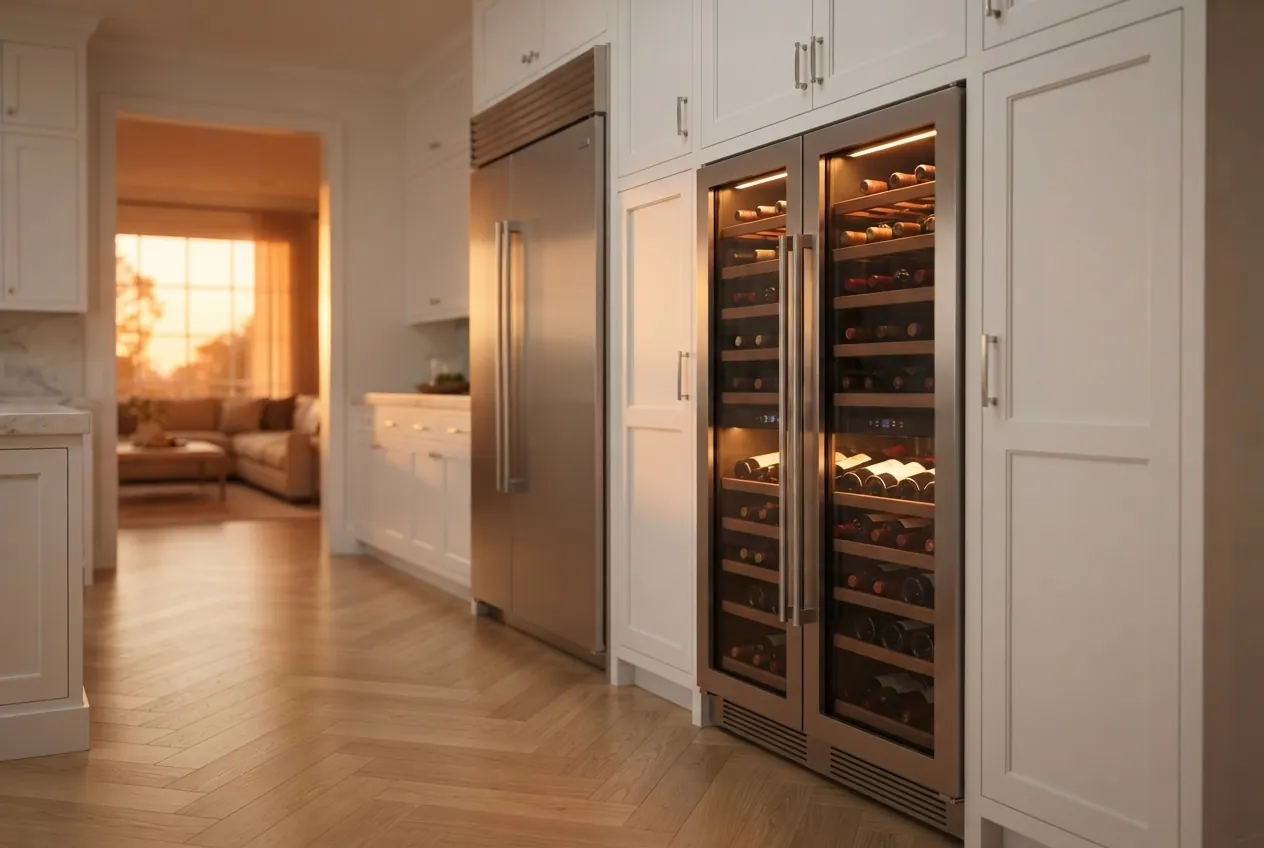
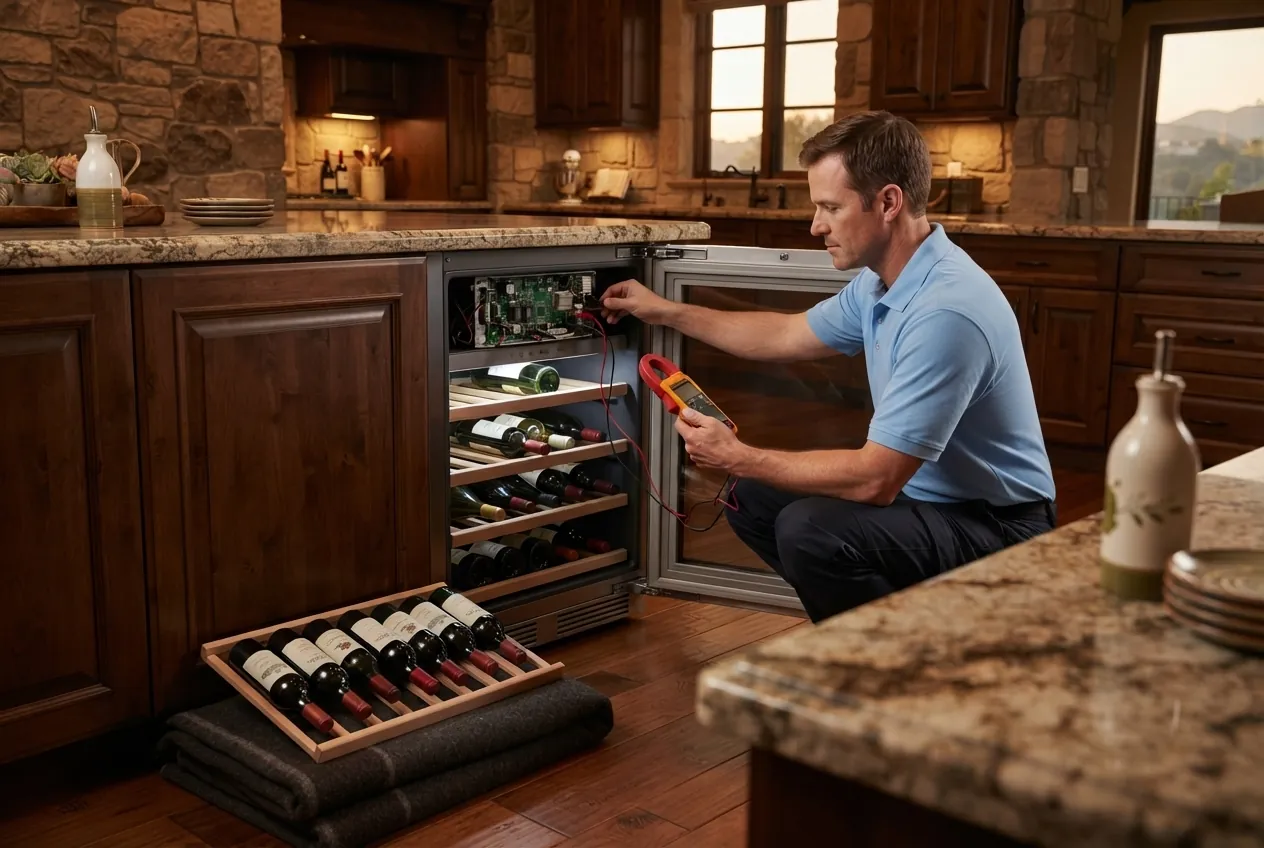
Common wine cooler problems we fix
- Not holding temperature. A blocked condenser, a failed fan, or an installation that cannot vent. We check airflow before anything else.
- One zone warm, the other correct. A damper, zone fan or sensor for that compartment rather than the whole cooling system.
- Condensation on the glass door. A perished door seal or a failed anti-condensation heater in the frame — both common and both repairable.
- Compressor running constantly. Usually heat it cannot shed: clogged coils, blocked grille, or ambient temperature beyond the unit’s rating.
- Vibration or hum. A fan motor or compressor mount. Worth fixing promptly — sustained vibration is genuinely bad for stored wine.
- Interior lighting or display failure. LED strips, drivers and control boards.
Wine storage we service
- Under-counter and built-in wine coolers, single and dual zone
- Full-height wine columns and integrated cellars
- Freestanding and countertop coolers
- Luxury platforms: Sub-Zero, Thermador, Liebherr, Miele, Perlick, U-Line, Marvel
- Purpose-built cellar cooling systems in converted rooms
Wine Cooler Repair FAQ
What temperature should a wine cooler hold?
Around 55°F for long-term storage. Dual-zone units typically run 45–50°F for whites and 55–65°F for reds. Stability matters more than the exact number — swings are what damage wine.
Why is my under-counter cooler struggling only in summer?
It cannot shed heat fast enough. Check the front grille is clear and the cabinet cutout leaves the clearance the manufacturer specifies. A clogged condenser is the other usual suspect, and cleaning it often solves the whole problem.
Is condensation inside the door a fault?
Some is normal on humid days. Persistent condensation means the door seal has hardened or the anti-condensation heater has failed — both repairable.
Should I empty the unit before you arrive?
No need. If the bottles have to come out for access, we will move them carefully and put them back.
Other appliances we repair
- Refrigerator & freezer repair
- Range & oven repair
- Dishwasher repair
- Washer repair
- Dryer repair
- Ice maker repair
- Coffee maker repair
Every appliance we cover is listed on the services page.